Sportswear Giant Sues Shop Over Unlicensed Use Of A Fourth Stripe
Lawyers argue that four parallel lines is just three parallel lines hiding behind a decoy, demanding immediate destruction of the offending cushions.
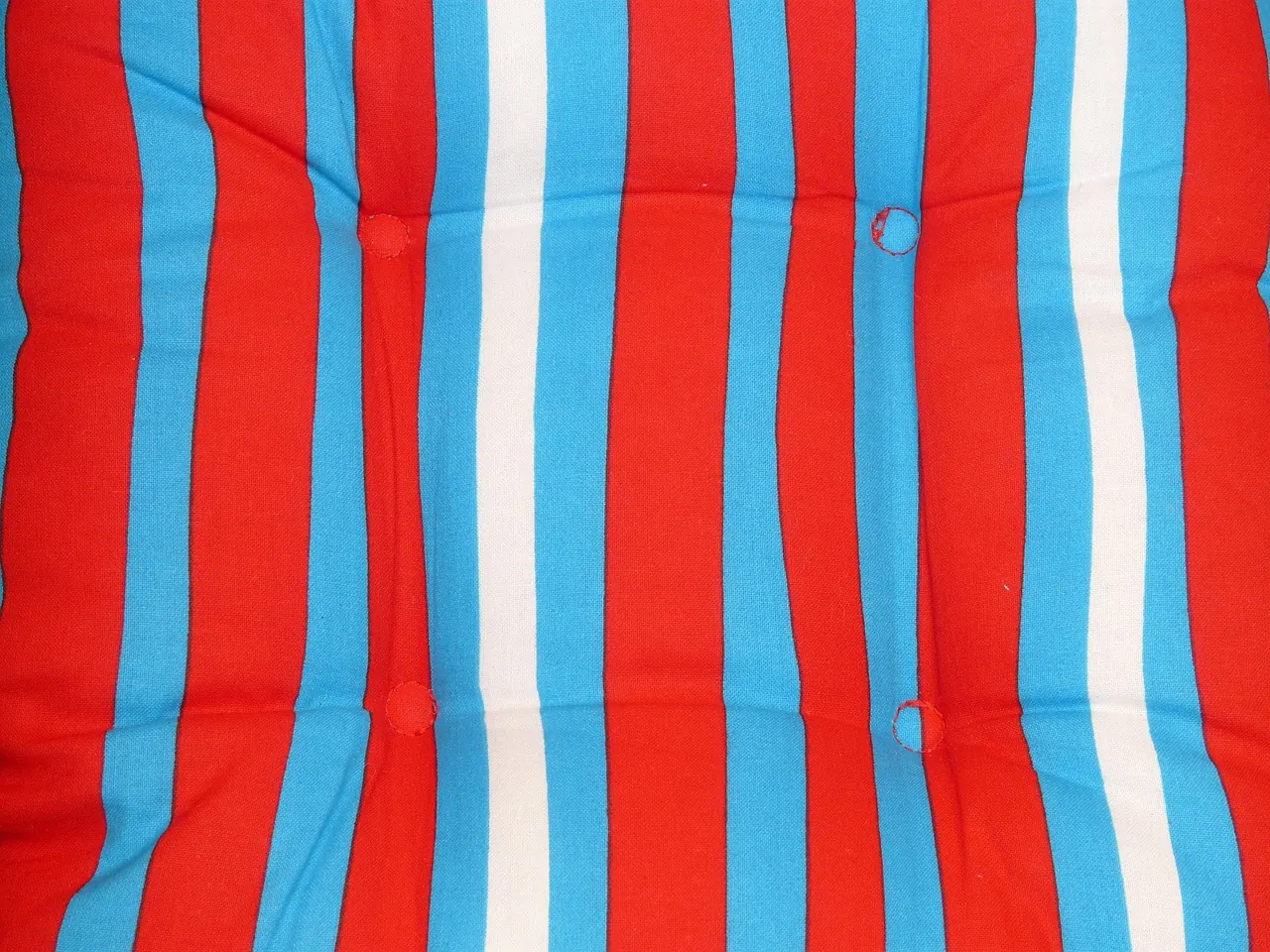
MIDDLEFORK, The Global Tracksuit Conglomerate has opened a massive legal offensive against a small independent upholstery shop over its new four-striped cushion covers. The company says the covers infringe its sacred right to three parallel lines. Its filing runs to thousands of pages and argues that four is, in practical terms, three wearing a disguise.
The paperwork arrived at the fabric shop in a fleet of heavily armoured delivery trucks. Lawyers for the multinational said the fourth stripe was a cowardly effort to conceal a stolen three-stripe design. Any set of four lines contains three lines, they argued, which makes the cushions corporate espionage.
“Look closely at this so-called four-stripe lumbar pillow and you can plainly see our protected three stripes, plus one arrogant decoy stripe at the edge,” said chief geometric litigator Penelope Gristle. She said the basic idea of putting straight lines beside one another was invented in a corporate boardroom decades ago. The public, she added, cannot simply be allowed to use it.
“The fragile human brain simply cannot process four stripes without thinking of three.”
Shop owner Timothy Puddle said he was confused by the legal helicopters hanging over his seasonal display window. He told reporters that four lines looked tidy on a corduroy sofa. Until that morning, he had not realised this placed him inside an international plot to destabilise the global athletic apparel market.
The court documents seek exclusive ownership of every integer from two to five. The company’s legal team is also preparing cases against piano keyboards, municipal pedestrian crossings and rain falling straight down.
That leaves the counting issue. Fashion-law experts say the case rests on whether the public can be trusted to count with any accuracy. The conglomerate submitted a psychological study which claims consumers become disoriented when they see more than two lines, then cannot tell a highly engineered running shoe from a decorative living-room accessory.
“The fragile human brain cannot process four stripes without thinking of three stripes first, then becoming tired from the extra maths,” said brand protection officer Silas Vance. He was redacting a barcode on his coffee cup to avoid accidental trademark infringement. “We are not bullies. We are protecting innocent shoppers from the severe neurological hazard of excessive linearity.”
The trial begins early next month in a custom-built hexagonal courtroom, designed so no structural walls run parallel. If the conglomerate wins, local residents will have fourteen days to remove every horizontally aligned object from their homes. After that, athletic retribution begins.