If AI Is So Clever, Why Does It Not Come with a Tamper-Evident Foil Lid?
Gary Opinions inspects his kitchen fridge to understand why Silicon Valley algorithms face far fewer legal hurdles than a pint of semi-skimmed.
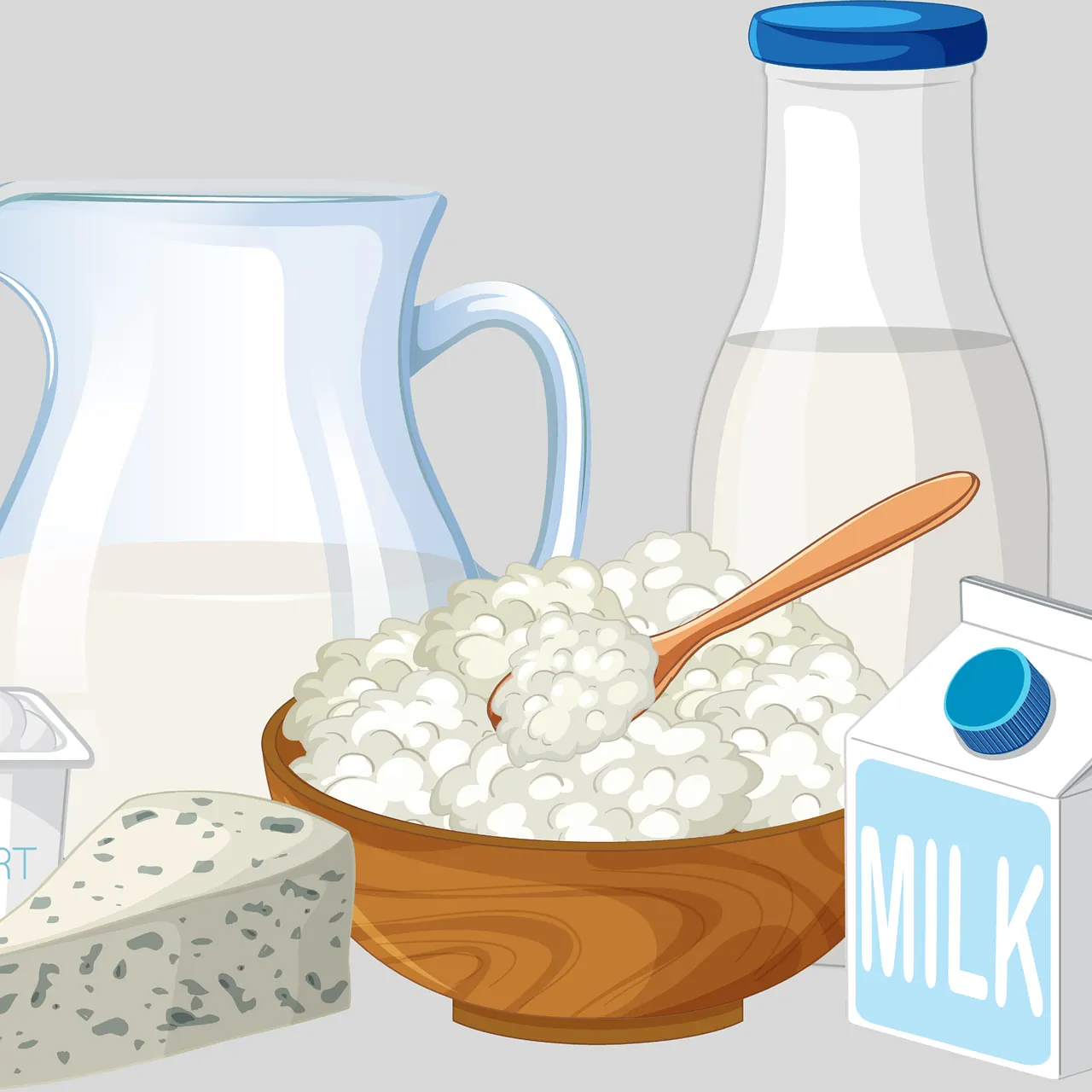
Microsoft’s president recently warned that artificial intelligence faces fewer safety standards than milk and washing machines. I took this for hyperbole at first. Then I spent three solid hours questioning a carton of pasteurised whole milk on my kitchen table, and the case became difficult to dispute. The carton states when it was produced, who is legally liable if it curdles, and the temperature required to stop it poisoning the parish. The neural network on my desktop offers no ingredients list. It also provides no assurance that it won’t go sour after four days on the counter.
Milk has done the paperwork. Before two pints can reach my morning tea, a farmer must satisfy sixteen statutory bodies, file pasture reports with the Department of Bovine Decorum, and fit a seal sturdy enough to defeat casual tampering. Meanwhile, a chatbot can draft contracts and automate financial markets with less administrative resistance than a bruised turnip. Lumpy milk sends a regional supply chain into quarantine. An algorithm invents a court case, and its owners call it emergent behaviour before requesting another thirty billion dollars.
That comparison seemed worth testing. I put the same question to my Indesit washing machine, which has an emergency drain hose, an automatic shut-off valve, and a substantial booklet forbidding the placement of badgers in the drum during the spin cycle. Sensible precautions. The software, despite claiming access to the sum of human knowledge, did not offer a childproof lock. Asked to balance my chequebook, it supplied an unsolicited recipe for glue, then asked whether I wanted to upgrade to the enterprise tier.
“The double standard is frankly insulting to dairy professionals.”
“The double standard is frankly insulting to dairy professionals,” said Alistair Finch, principal compliance officer at the National Board of Curd Integrity. “Every batch of double cream undergoes microscopic screening. Tech companies dump a quadrillion raw mathematical parameters into the drinking water and hope for the best.” Mr Finch added that, were his cheese to behave like a modern search engine, he would now be serving a custodial sentence in a refrigerated cell.
The cheese has a point. Every tumble dryer sold in Britain must carry a large rainbow label setting out its thermodynamic virtues. An algorithm can consume the electrical grid of a small county while making pictures of cats in bowler hats, yet nobody stamps an efficiency rating on its forehead. A dishwasher must beep when the salt runs low. Artificial intelligence should at least sound a klaxon when it fails basic arithmetic.
Silicon Valley says regulation would stifle innovation. Dairy farmers have somehow continued to innovate under pasteurisation directives, so a room of programmers in fleece gilets should be able to produce a spill-proof cap for predictive text. Give every artificial mind a mandatory expiry date. Leave a model idle on a server beyond next Tuesday and it should sour, quietly, before being poured down the digital sink.
Until then, my executive decisions are being transferred to the white goods. The washing machine occasionally eats a sock, though its drum has been tested against centrifugal catastrophe. I can live with that. The pint of milk beside my keyboard gives me a measure of peace: it cannot write mediocre poetry, and it has never tried to restructure my pension while my back was turned.