Touring Needlework Exhibition Inspires Village To Wage Medieval Broadsword War
An ancient embroidered curtain displayed in the village hall prompted over three hundred council workers to settle boundary disputes in a muddy oat field.
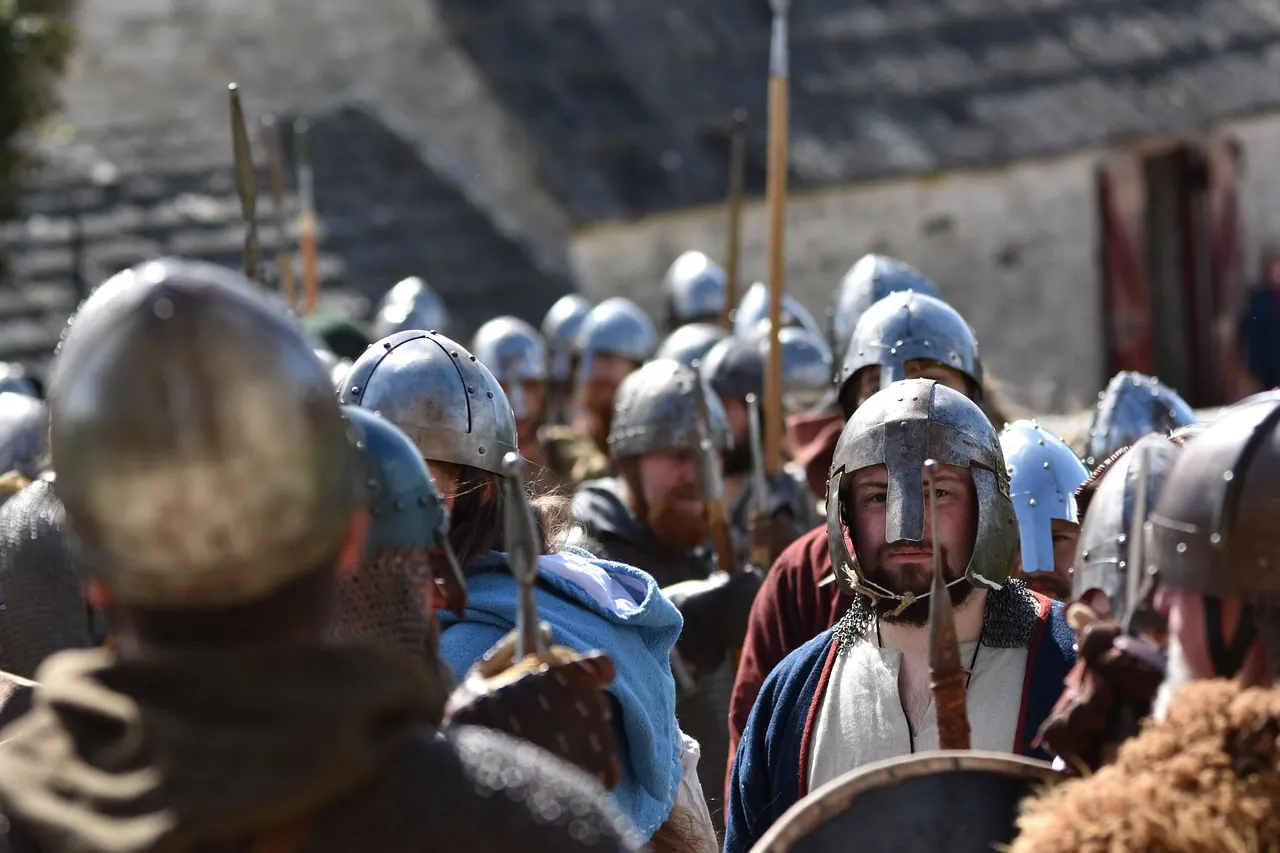
LOWER CHIPPING, A touring museum exhibition of an ancient embroidered curtain has sent hundreds of ordinarily mild local residents into an open pasture to hit one another with broadswords. Organisers said a twenty-minute public viewing of the eleventh-century needlework in the municipal hall left more than three hundred administrative assistants, driving instructors and allotment holders convinced they must settle a disputed boundary ditch through medieval hand-to-hand combat.
At the centre of the dispute sits the Chipping Valance, a forty-metre strip of yellowed linen showing simplified woollen figures stabbing one another over a stray goose. Curators brought it to the region to encourage a little interest in medieval dye techniques. Visitors instead left the gallery in a condition of feudal excitement, made shields from galvanised dustbin lids, and marched behind the depot towards an overgrown clover field.
“We thought people might admire the stem stitching and perhaps buy a lavender sachet from the gift shop,” said Nigel Pinfold, the museum’s chief keeper of textiles and emergency tourniquets. “We did not expect thirty-eight actuaries to form a shield wall behind the bus shelter and demand the surrender of the neighbouring parish. The leaflets gave no guidance at all on annexing a bakery by right of conquest.”
“The exhibition leaflets contained zero instructions on how to annex a bakery.”
The crowd had chosen its field. Hostilities began shortly before lunch, when factions from the eastern and western ends of the High Street formed ranks on either side of a drainage ditch. They followed suburban chivalric rules with commendable seriousness. Heavy blows involved blunted replica steel, cardboard pikes, and roasting pans taped to forearms with electrical tape. Combatants also had to shout Saxon insults, though they were asked not to trample the ornamental hydrangeas around the field.
“The needlework spoke directly to my soul, or at least the part of it that is sick of updating spreadsheets,” said Archibald Clatterbuck, a senior municipal zoning officer and grand marshal of the northern flank. He wore a colander held on with zip ties. “You see a crudely embroidered Norman foot soldier striking someone with a mace and you understand that polite emails will never settle a dispute about uncollected recycling bins. Iron and wool are the only definitive arbitration.”
The fighting then became more orderly. Independent observers recorded no casualties, despite fierce charges and extended jostling near the sheep dip. Officials stopped the battle three times: after a stray broadsword hit an automated lawnmower, while the parish vicar recovered his reading glasses from the mud, and for the compulsory forty-minute egg-and-cress sandwich interval. A neutral referee with a clipboard reviewed every simulated decapitation on video.
By sunset, both sides had claimed total victory. They withdrew to the church hall, drank lukewarm tea, and compared dents in their kitchenware. Parish authorities said the field was covered with broken wooden halberds and discarded wool, but no lasting feudal unrest had developed. A planned display of an ancient medieval tapestry depicting naval warfare has been cancelled quietly until the municipal pool obtains sufficient flotation devices.