Bayeux Tapestry Demands UK Battle Reenactors Fight In Strict Two-Dimensional Profile
The seventy-metre ancient embroidery has formed a trade union to protest thousands of British adults whacking each other with blunt swords in a muddy Sussex field.
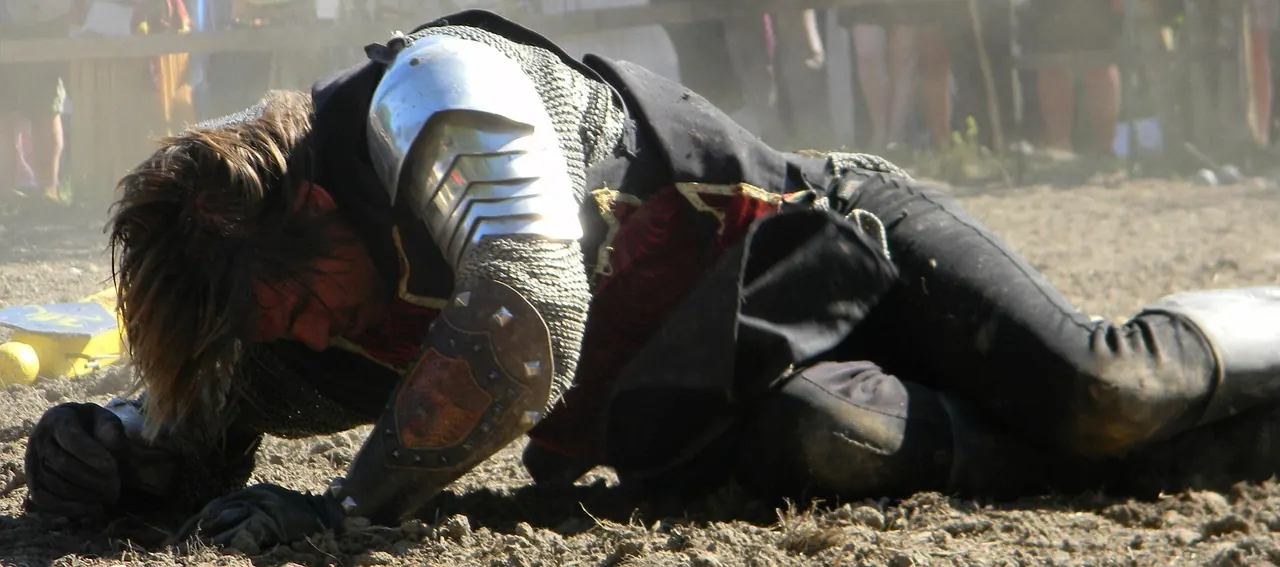
HASTINGS, Historical enthusiasm over the Bayeux Tapestry’s forthcoming London exhibition brought thousands of British adults to a wet Sussex field for the annual Battle of Hastings reenactment. By Saturday, the seventy-metre embroidery had developed a collective consciousness, joined a union and informed everyone present that eleventh-century warfare would now follow the laws of needlework.
The Amalgamated Union of Crewel Yarn and Stitched Cavalry filed an emergency grievance that morning. It said modern participants were handling medieval combat with unacceptable depth. Several thousand project managers, dental hygienists and local solicitors had arrived in replica chainmail, then started moving their arms as though they occupied a three-dimensional world.
“The cloth has spent nine centuries lying flat and expects basic courtesy from the public,” said Gwendolyn Thrum, Chief Thread Arbiter for the Joint Council of Medieval Needlework. “You cannot inspect a Norman masterpiece on Tuesday, then spend Saturday on a hill bending your elbows in every direction. Reenactors must turn sideways, lock their joints and move laterally through the grass like proper linen figures.”
“The cloth has spent nine centuries lying flat and expects basic courtesy from the public.”
The tapestry’s new safety rules required anyone advancing on the Saxon shield wall to abandon personal perspective and hop sideways in single file. The bottom eighteen inches of the field were set aside for decorative mythical beasts. Forty-two volunteer accountants spent most of the afternoon crawling through the turf as ornamental gryphons and headless dogs.
The dispute then reached the weapons.
Panel Fifty-Seven dismissed the iron broadswords and wooden shields as structurally excessive. Both sides were told to strike one another only with tightly rolled lengths of dyed wool. Archers had it worse. They could hold arrows aloft, but could not release them, since projectiles in the original cloth remain suspended on plainly visible brown threads.
“We managed about twenty minutes sideways before forty Norman cavalrymen got hip cramps,” said Alistair Pringle, an amateur Saxon axeman and senior database administrator from Lewes. “My shield went into the mud because I wasn’t permitted to turn my wrist. Then someone playing King Harold was reprimanded for bleeding in three dimensions.”
An inspector arrived with a sewing kit and attempted to glue three inches of burgundy yarn to Harold’s forehead. The actor objected. The inspector recorded the objection in a small notebook.
By Sunday afternoon, talks between the Sussex reenactors and the textile union had stopped over lunch breaks and border decorum. The embroidery said it would recognise neither the Norman victory nor the English defeat until its demands were met. The result of 1066 now awaits an administrative review by the local borough council. Spectators have been asked to remain sideways until further notice.