Scientists Discover Corporate Jargon Generates Subatomic Particles That Alter Room Gravity
The newly identified 'Meetingon' particle is created by corporate buzzwords and physically traps employees in their chairs by increasing the mass of the room.
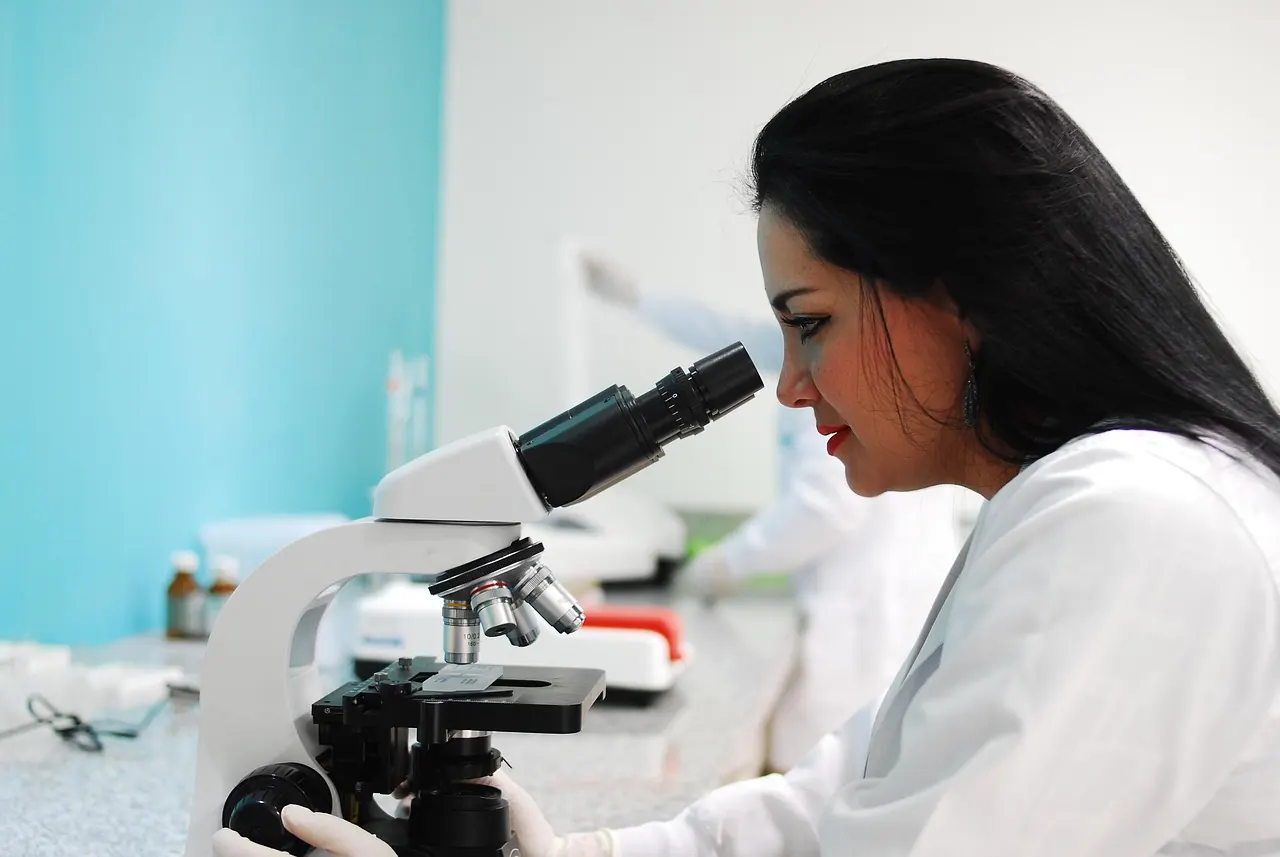
LOWER STAPLETON, A study published today by the Institute of Cubicle Dynamics has confirmed a new subatomic particle generated entirely by corporate meetings. It increases a room’s density and leaves employees stuck in their chairs.
Researchers call it the Meetingon. It appears whenever a mid-level manager says “let’s put a pin in that” or “I want to piggyback on what was just said.” The phrases trigger a quantum event in the conference room’s gravitational field. Standing up becomes difficult. Checking the time gets worse. The exit, for reasons nobody has yet been paid enough to explain, becomes physically unavailable.
Dr. Arlo Hemlock, lead researcher and head of theoretical administration, said the Meetingon has properties absent from the standard model of physics. It carries no charge, serves no useful purpose and has an infinite half-life. A badly planned strategy session can therefore remain in the room for weeks after everyone has finally been released.
“The air got so heavy that my pen was crushed into diamond.”
“We first noticed the anomaly during a regional sales review scheduled for fifteen minutes that entered its third day,” Dr. Hemlock said, adjusting a lab coat covered in whiteboard-marker stains. “We measured the atmospheric pressure and found the air thickening into a gelatinous state of pure corporate alignment. Then someone said we should circle back on the quarterly figures. Gravity reached Jupiter levels.”
The team then put a single intern in a sealed chamber and piped in recordings of people discussing action items. Ten minutes later, unresolved deliverables had pinned him to the floor. He survived by sliding a note under the door requesting a pivot in strategy.
Office workers across the region had already suspected that cross-departmental alignment sessions interfere with time and space. Fiona Plimsoll, a local data entry specialist, said the finding explains why her coffee freezes the moment someone shares their screen. The hallway door also starts moving away from her, like a mirage with a calendar invite.
“I knew it wasn’t my imagination,” Plimsoll said from behind a barricade of empty filing boxes. “Last Tuesday, the director of human resources told us to think outside the box, and I felt my skeleton compress. My pen became diamond. We waited for the cleaning staff to vacuum near the threshold, which broke the quantum lock.”
The institute is developing countermeasures, including an acoustic dampener that turns corporate jargon into the sound of a babbling brook. Early trials went poorly. The device took “deep dive” literally and flooded a second-floor boardroom with 300 gallons of saltwater and a small pod of confused dolphins.
For now, scientists advise office personnel to wear weighted boots and tether themselves to their desks before joining calls with more than four participants. If spontaneous brainstorming begins, employees should get on the floor, cover their ears and keep repeating that they have a hard stop at four o’clock.