Dark Skies Festival Announces Revolutionary Return To Standing Outside At Night
Exmoor’s tenth anniversary festival is drawing crowds with astronomy, nature and the increasingly premium experience of darkness.
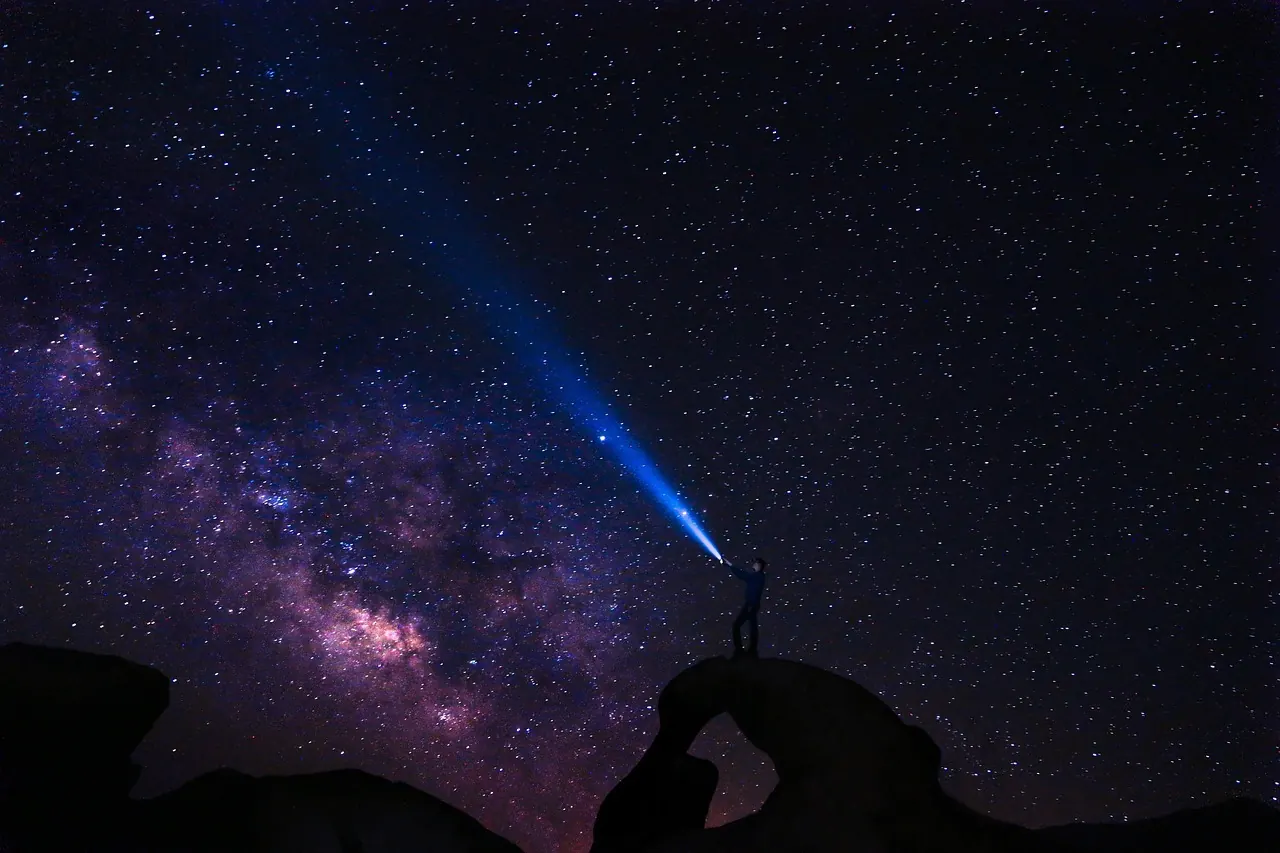
EXMOOR, By Dr. Pat Hypothesis. The Exmoor Dark Skies Festival is marking its tenth anniversary with about 80 stargazing, astronomy and nature events. Visitors will once again be invited to stand outdoors after sunset and confirm that nobody has switched the sky off.
Organisers do not say they invented night-time. Still, the festival’s popularity indicates that people are prepared to encounter it in an orderly setting, ideally with a ticket, a timetable and a small paper wristband confirming that this particular darkness has been approved.
“People used to get this for free,” said Crispin Vellum, deputy coordinator of the Committee for the Sensible Appreciation of Nothing. “Now they can enjoy it together, with educational context, and the reassurance of several nearby telescopes if the blackness starts behaving oddly.”
“Humanity has arrived at the bold new destination of adding nothing to the sky.”
The programme covers the usual business of a scientific celebration. People will look up, ask questions and learn that the thing they had confidently called a star was an aircraft, a planet, or an exceptionally self-assured speck of dust on somebody’s glasses.
Tickets are expected to sell well. The festival has, after all, turned the absence of light into an event. Visitors can admire the darkness and think about it. Advanced sessions ask them to identify different grades of darkness from a laminated chart while maintaining an expression of respectful awe.
A man standing nearby said the evening had altered his view of the night. “Before this, I thought darkness was what happened when I forgot the torch,” he said. “Now I understand it’s a vast natural phenomenon, and also something I should apparently book months in advance.”
That booking requirement brings the anniversary into focus. After centuries spent developing electricity, screens and illuminated advertising, humanity has reached a new point of public science: travelling to a national park to look at the sky without adding anything to it.
“Our long-term ambition is to make standing still internationally competitive,” said Professor Ludo Quince, chair of the Emergency Subcommittee on Atmospheric Blackness. “If this carries on, people will be queueing for premium silence, artisanal moonlight and limited-edition clouds.”