Scientists Confirm Mondays Are 14% Longer Than Other Days
The study, which took several Mondays to complete, found the extra time is “mostly spent in the morning.”
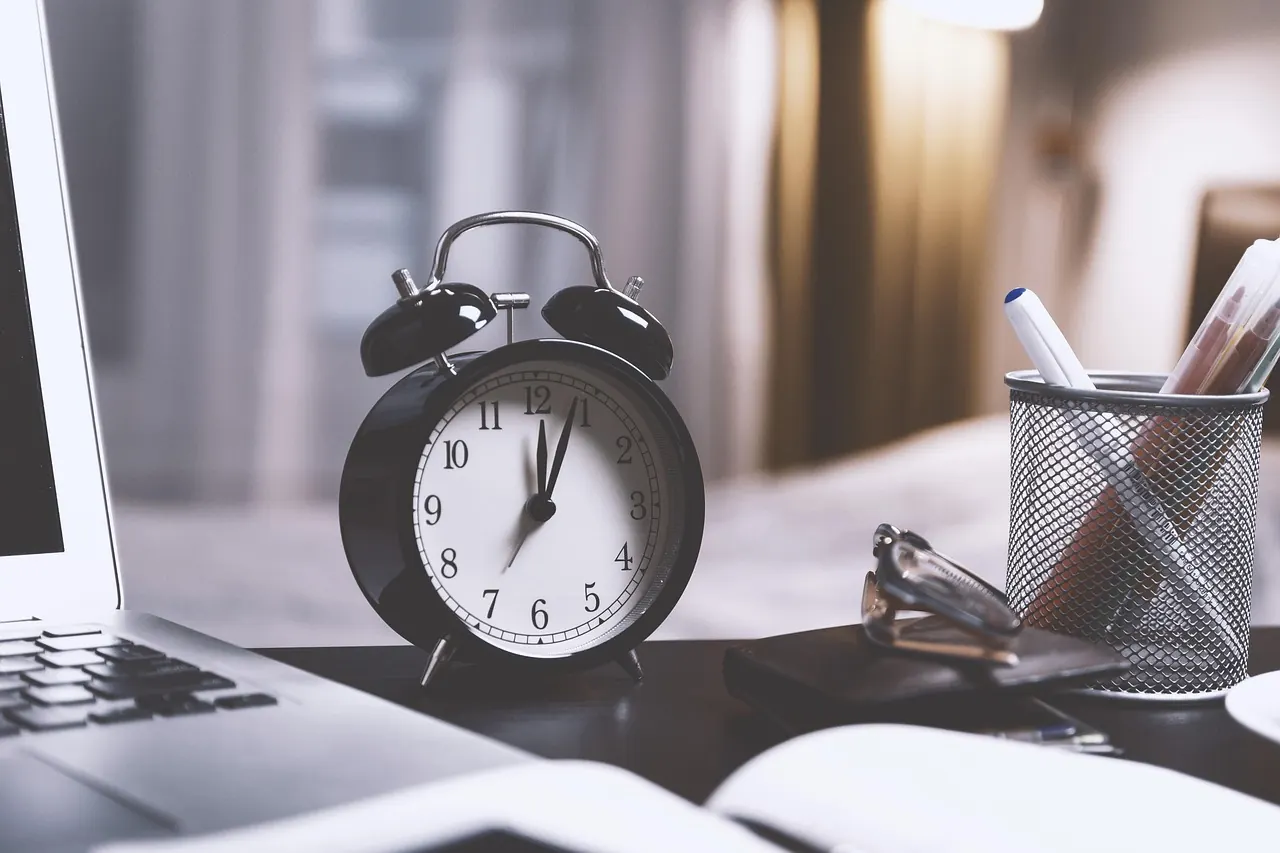
LOWER WOMBLEY, A temporal physics study has confirmed what office workers have suspected for decades. Mondays are objectively and measurably longer than other days. Researchers at the Wombley Institute for Applied Clock Watching concluded that the 24-hour period between Sunday night and Tuesday morning actually stretches to 27.3 hours. The majority of this expansion happens before lunch. It’s particularly noticeable when you try to open the HR newsletter.
The mechanics of this distortion are entirely biological. Dr. Arbuthnot Pendulum, head of the Department of Lingering Afternoons, explained that spacetime sags under the collective reluctance of the working population. Human sighs emit a 12-hertz vibration. This interacts directly with the planet’s gravitational pull. It slows the rotation of the Earth just enough to make a weekly budget update last an entire geological epoch. Which explains a lot.
Pendulum’s team placed atomic clocks around the town to track the phenomenon. One went in a beige conference room. Another sat at the damp bus stop outside the municipal baths. They installed a third by the broken vending machine on the fourth floor of an administrative building. They compared this data against identical clocks placed inside a pub on a Saturday.
“The laws of physics do not care about your fresh pressed shirts or your weekend rest.”
The data showed a severe local dilation. A minute spent reviewing a spreadsheet on a Monday morning contains 85 seconds. A minute in a pub on Saturday contains 40. And they documented a severe temporal anomaly at exactly 11:15 AM on Mondays. They call this the Desk Event Horizon. Time simply stops moving forward.
Everyone must endure the extra 14%. Professor Beatrice Sprocket of the Lower Wombley School of Tedium confirmed that the laws of physics do not care about your weekend rest. People try to counteract the elongation with excessive coffee. This doesn’t speed up time. It just means workers experience the extra hours with an elevated heart rate and a faint tremor in their left eyelid.
Most researchers accept the findings. Some argue the 14% estimate is conservative. Dr. Simon Snooze is a theoretical chronologist. He calculates that January Mondays stretch by up to 30%. This creates a temporal distortion field powerful enough to bend the light from office fluorescent tubes. It makes all colleagues appear grey and entirely devoid of hope.
Local unions immediately requested a corresponding 14% increase in weekend hours to restore balance. The Ministry of Temporal Affairs rejected the proposal on Tuesday. Releasing extra weekend hours into the atmosphere could lead to unregulated leisure. A spokesperson noted this action could tear a permanent hole in the middle of Thursday afternoon. The paperwork remains pending.