Astronomers Urge Tiny Star to Chew Faster as Billions-Long Feast Drags On
A low-mass star three hundred light-years away has spent an eternity nibbling on its brown dwarf neighbor with no intention of clearing the table.
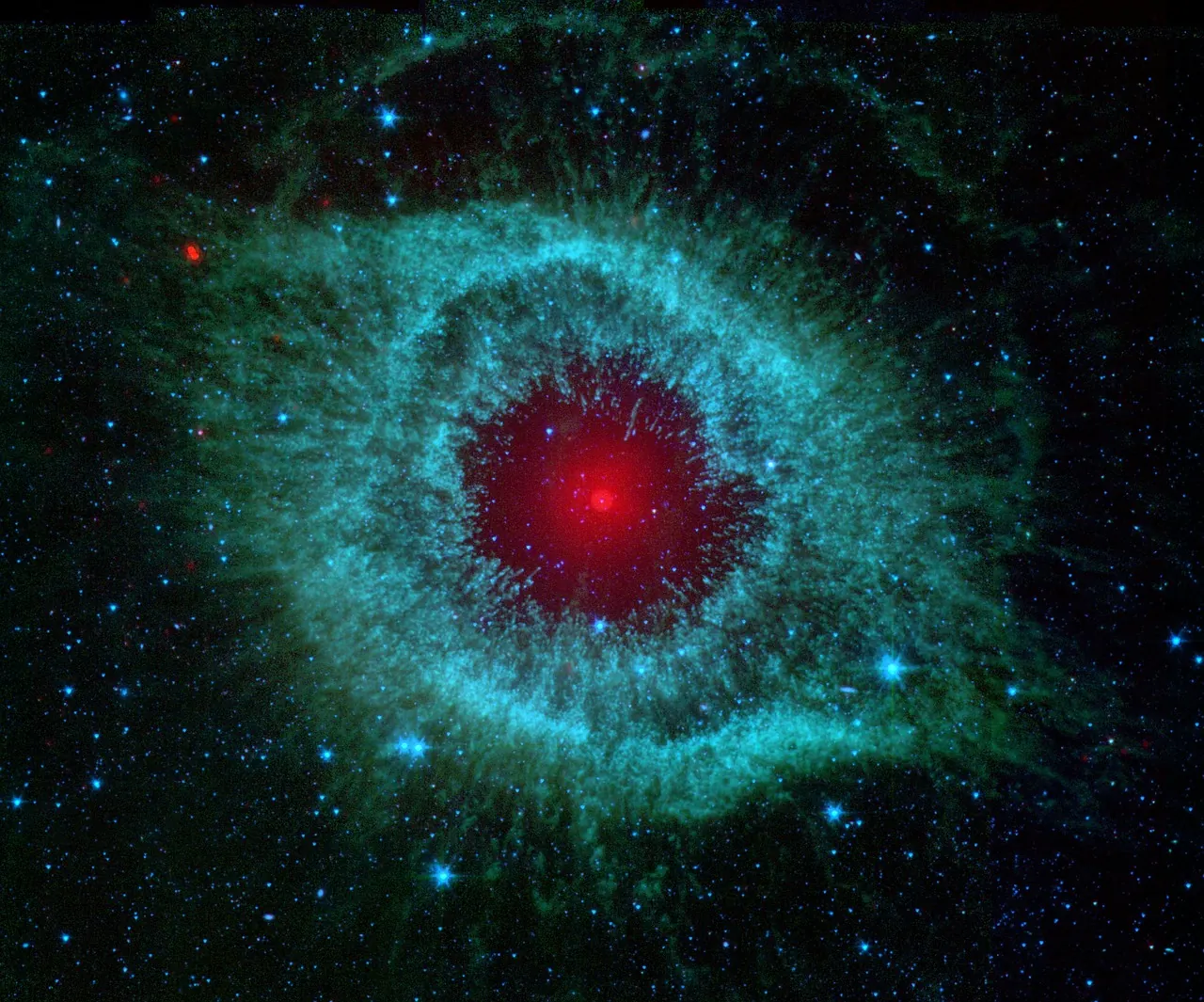
CAMBRIDGE, Astronomers studying a star system 300 light-years from Earth say they have found the slowest diner in galactic history. A low-mass star has spent eons taking microscopic bites from its brown-dwarf companion. Researchers had hoped to clear the table before the end of term. That now seems optimistic.
The gravitational siphon moves with the speed of someone taking apart one bread roll across a geological era. Most cosmic incidents get on with it. This star keeps drawing in pinpricks of gas from its neighbour, as though it has ordered a lukewarm drink and intends to make an evening of it. The amounts involved have barely troubled the cosmic ledger since the Cretaceous period.
“There is no urgency whatsoever in this accretion disk,” said Dr. Fiona Vole, Senior Celestial Decorum Analyst at the Interstellar Institute of Deep Space Manners. “A hungry star should consume its companion with some dignified briskness. This system has been sat with the same appetizer since the sun formed. It is nursing a pint for four billion years.”
“It is someone nursing a pint for four billion years.”
The brown dwarf is losing its cool atmosphere by an imperceptible trickle. There will be no spectacular burst of radiation, apparently. Instead, it remains in gravitational limbo while its partner finishes lunch at a pace that would concern a restaurant manager. Telemetry indicates it has not moved three inches nearer destruction in 40 million years.
That has worn people down. Graduate students assigned to chart the plasma flow say several cohorts have handed in the same graph: a faint strand of matter suspended between two spheres, neither of which appears interested in academic deadlines. By Thursday, one department had stopped pretending the next reading would differ.
“Our department has had four chairs and a full software migration, and that star still has not swallowed its first bite,” said Professor Alistair Crumb, Coordinator of Galactic Inactivity at the Southern Sky Survey. “We installed spectrometers expecting cosmic drama. Instead, we watched an unblinking ball cut dinner into invisible sixteenths, then stare into space for several millennia.”
The orbit makes the arrangement worse. As the brown dwarf loses mass, it will drift farther out, slowing the feeding still further. By the time the primary star reaches the core, the Milky Way will have collided with Andromeda, the sun will have become a white dwarf, and university administrators will still be discussing office supplies.
Observers have asked the star to finish up or request a takeaway box. Gravity has declined to comment. Telescope operators will check the system once every 6,000 years and leave the pair to continue what is now the universe’s longest passive-aggressive dinner party.